

Why Vinyl?
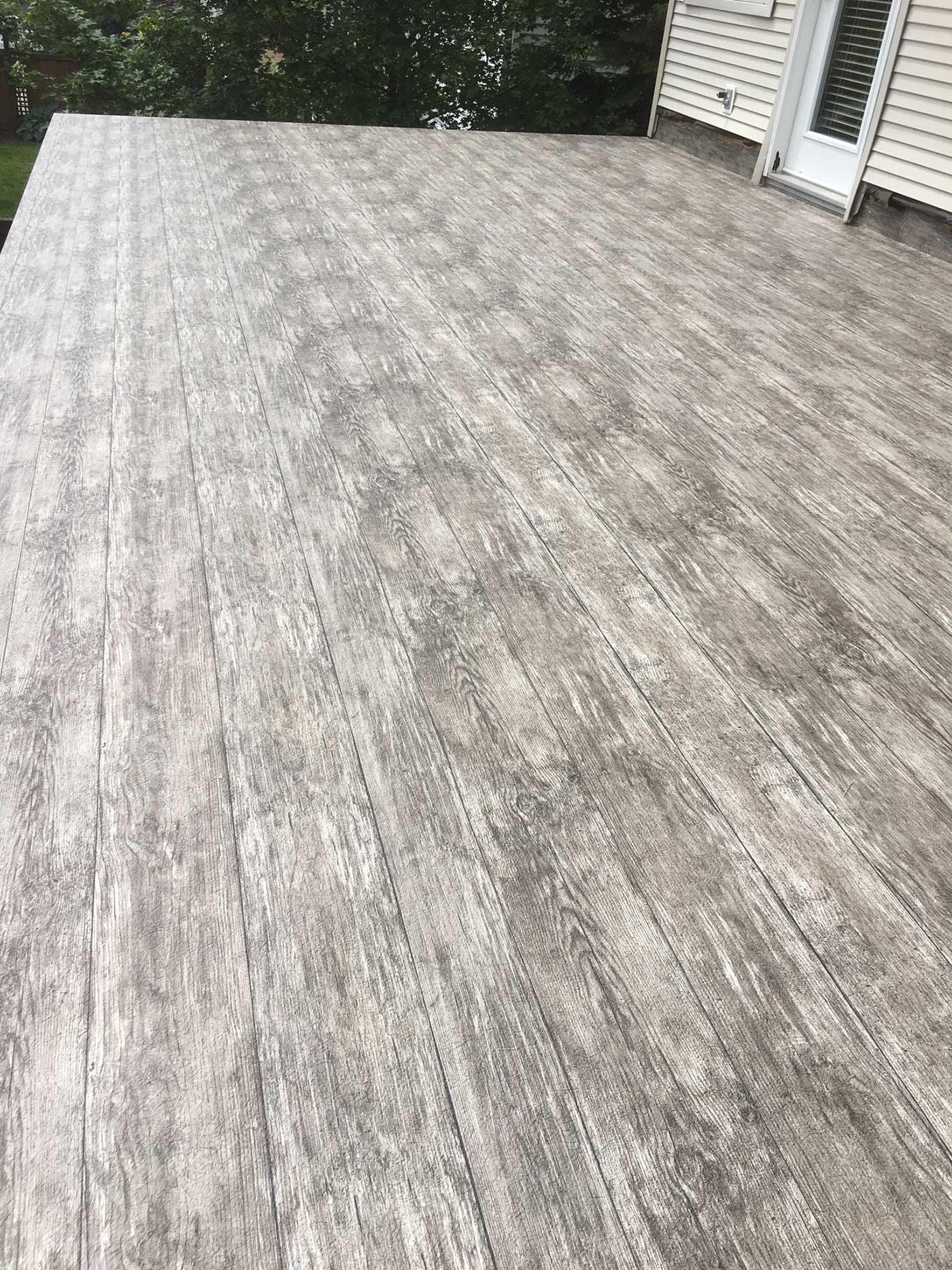
There are many advantages to choosing vinyl decking for your home. Besides the economical and flexible nature of vinyl, it is also stain and scratch resistance and suitable for the weather conditions in the Lower Mainland.
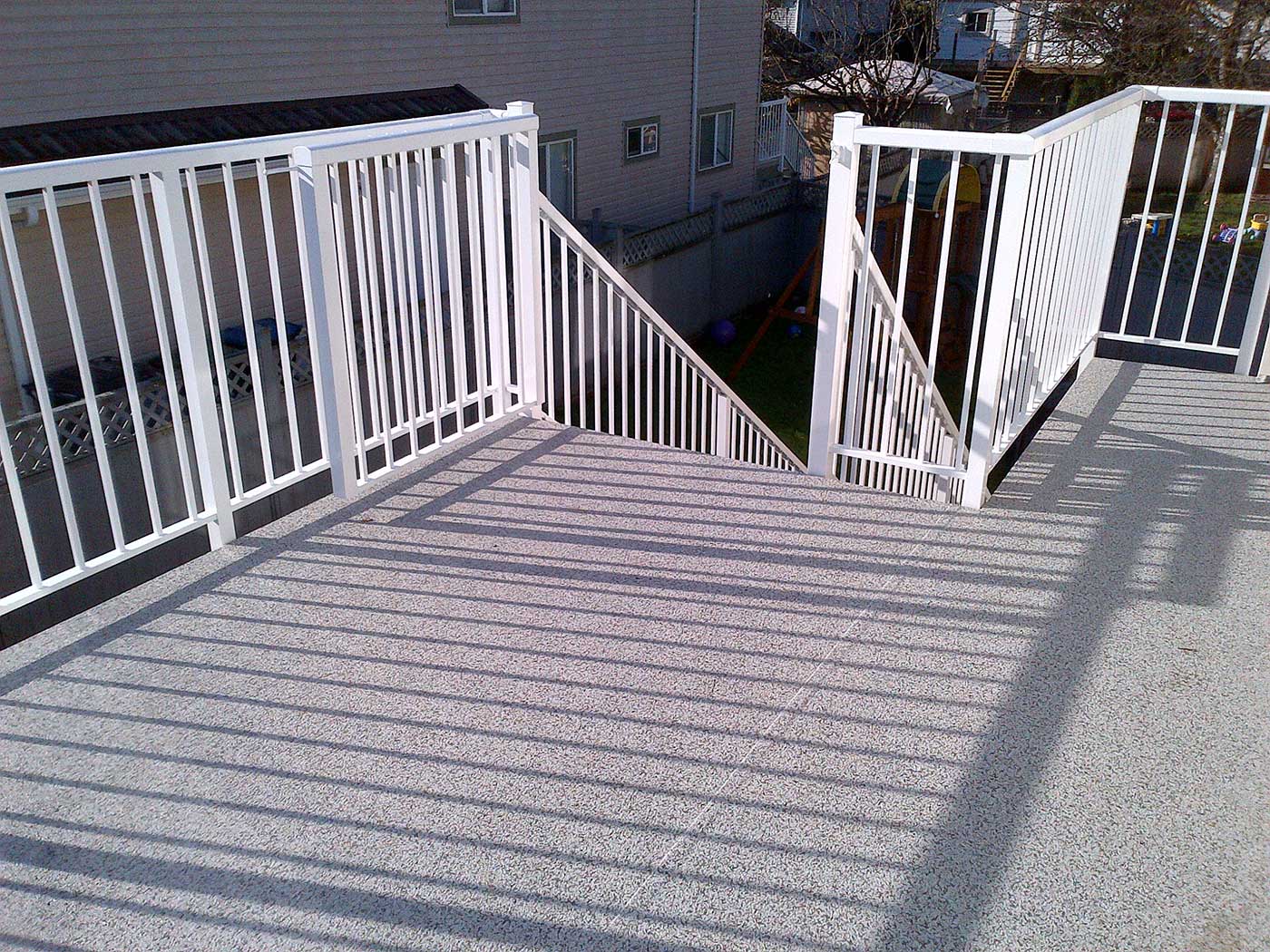
Vinyl decks are also very easy to maintain and can be kept spotless and looking like new, with very little maintenance. They are also available in a wide range of colors. Since a vinyl deck is water-proof, it is also ideal for creating a dry space beneath (ie: a lower entrance or storage space)
What Is Vinyl Decking?
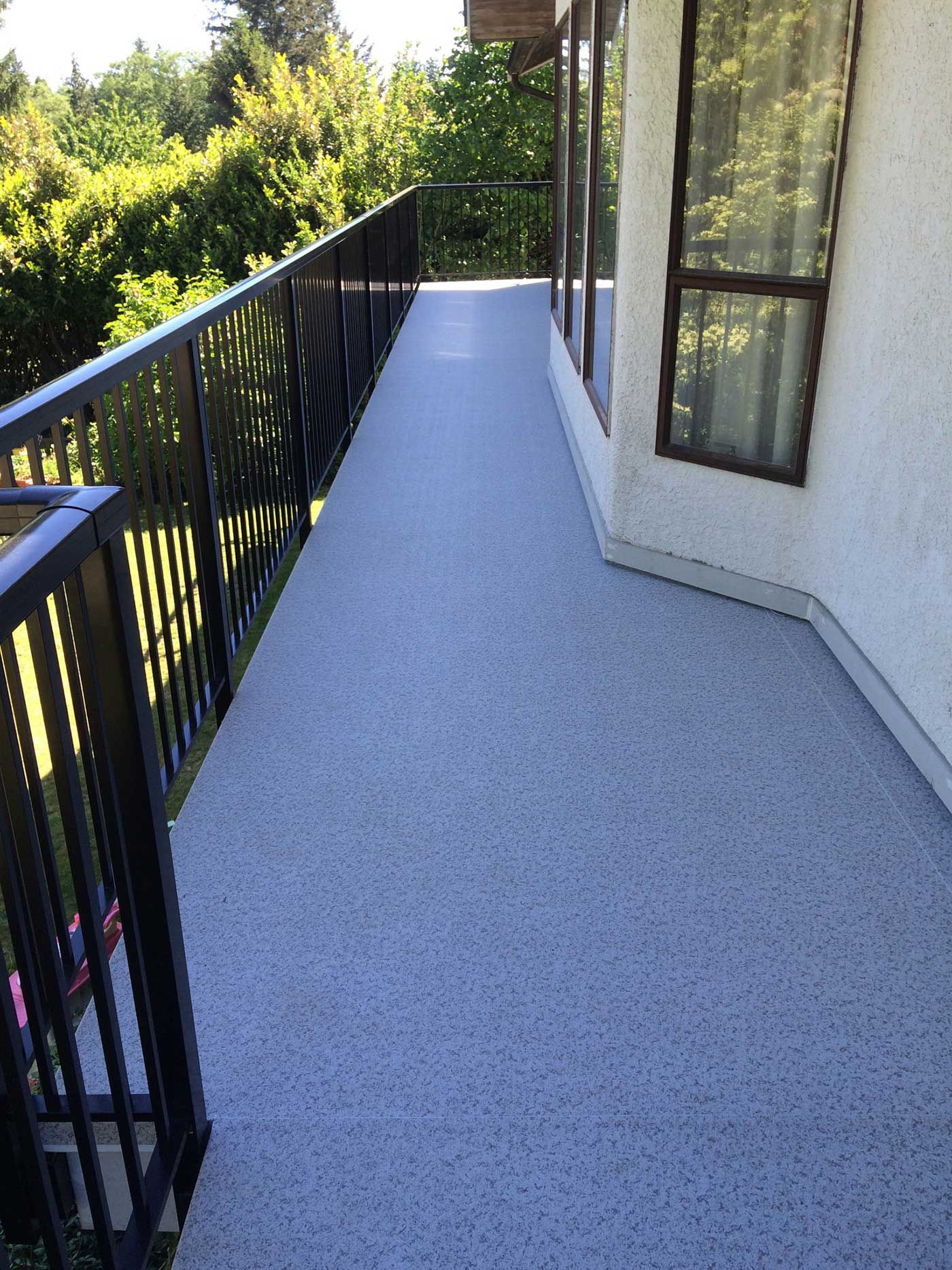
Vinyl decking uses a waterproof membrane to create the finished walking surface of your deck.
Unlike individual deck boards with open gaps between them, the vinyl surface is installed as a continuous waterproofing system. That makes it particularly useful when preventing water from reaching the area below is part of the project.
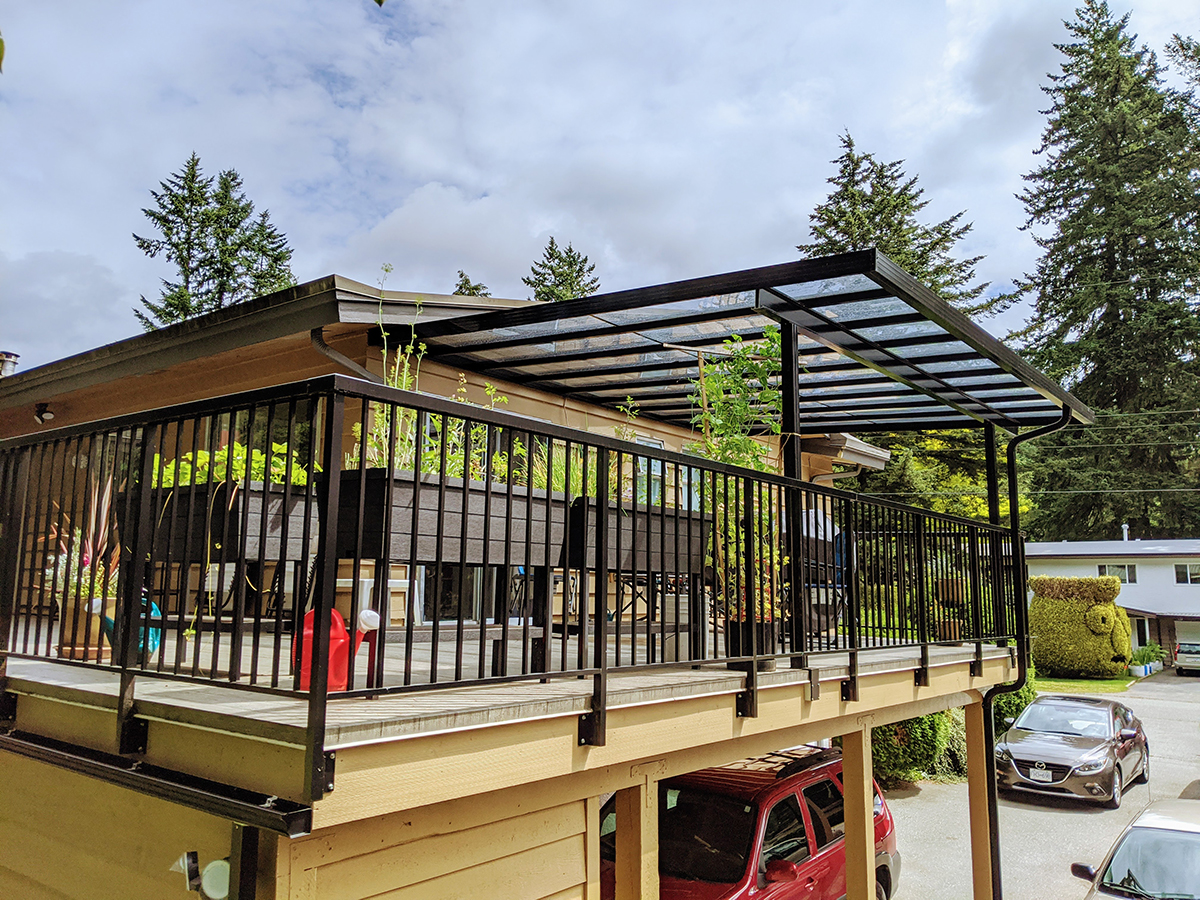
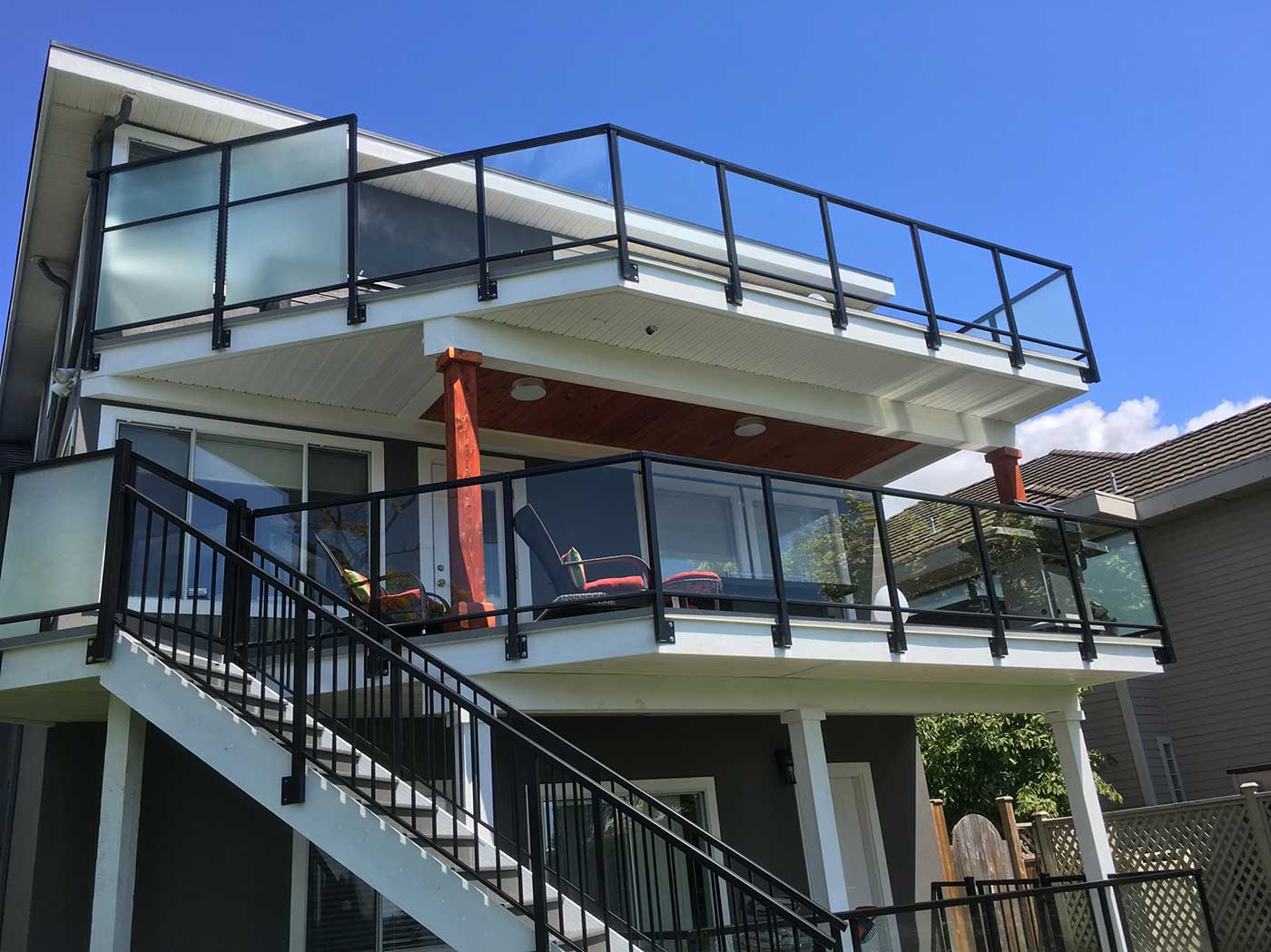
For you, that can mean getting two useful spaces from one deck. The upper level gives you an outdoor living area, while the waterproof surface can help keep a lower entrance, patio, or storage area dry.
Is Vinyl Decking a Good Choice for BC Homes?
Yes. Vinyl decking is a practical option for Lower Mainland homeowners who want a waterproof deck surface with relatively simple maintenance.
Vinyl can be a good fit if you want:
- A waterproof deck surface
- Dry space beneath an elevated deck
- Lower maintenance than many wood surfaces
- A range of colours and finishes
- A practical surface for Lower Mainland weather
We’ll look at how your deck is built, what’s underneath it, and how you plan to use the space before recommending vinyl.
Is Vinyl Decking Really Waterproof?
When it’s installed as a proper vinyl membrane system, vinyl decking creates a waterproof surface.
The important part is that waterproofing depends on more than laying material across a deck. Details around seams, edges, transitions, drainage, and adjoining parts of the home all matter.
That’s why we look at the complete deck rather than treating the vinyl as a decorative finish.
If your main goal is keeping the space below dry, tell us during the quote. We can plan around that requirement from the beginning.
Why Does Waterproof Vinyl Decking Work Well in the Lower Mainland?
Rain is part of owning an outdoor space in the Lower Mainland.
That doesn’t mean every deck needs a waterproof membrane, but if water getting through the deck would create a problem below, waterproofing should be considered early in the design.
Vinyl is especially worth discussing when:
- Your deck is above an entrance
- You want dry storage underneath
- There’s a patio or usable area below
- Keeping the deck structure protected from surface water is a priority
- You want a finished waterproof surface rather than spaced deck boards
We’d rather understand that requirement before the project starts than try to solve it after the deck is already built.
Is Vinyl Decking Really Waterproof?
When it’s installed as a proper vinyl membrane system, vinyl decking creates a waterproof surface.
The important part is that waterproofing depends on more than laying material across a deck. Details around seams, edges, transitions, drainage, and adjoining parts of the home all matter.
That’s why we look at the complete deck rather than treating the vinyl as a decorative finish.
If your main goal is keeping the space below dry, tell us during the quote. We can plan around that requirement from the beginning.
Can Vinyl Decking Create Dry Space Under a Deck?
Yes. This is one of the strongest reasons to consider vinyl decking.
If you have an elevated deck, a waterproof vinyl surface can help create usable dry space beneath it. Depending on the layout of your home, you may want that lower area for storage, an entrance, or another outdoor space.
We’ll ask about this early because it affects how we approach the project.
If you don’t need waterproofing underneath, we can also help you compare vinyl with composite, cedar, pressure-treated wood, fibreglass, or Flexstone.
How Much Maintenance Does Vinyl Decking Need?
Vinyl decking is designed to be relatively easy to maintain.
You’ll still need to clean the surface and remove dirt, leaves, and other outdoor debris. In the Lower Mainland, that matters because wet organic material can sit on a deck for long periods during fall and winter.
You won’t have the same staining routine associated with many natural wood decks.
We recommend caring for the specific vinyl product according to its manufacturer’s instructions rather than assuming every membrane should be cleaned in exactly the same way.
Does Vinyl Decking Need to Be Stained or Sealed?
No regular wood stain is required.
The vinyl membrane itself provides the finished surface. That’s one reason homeowners who want to reduce ongoing deck maintenance often consider it.
If you prefer the appearance and feel of real wood and don’t mind additional upkeep, cedar may be a better fit. We’ll explain the trade-offs rather than steering you toward one material automatically.
How Do We Approach a Vinyl Deck Project?
A vinyl deck needs to work as both an outdoor living surface and a waterproofing system.
Our planning starts with your home and how you’ll use the space.
1. We Look at the Deck and the Area Below
We’ll assess the deck location, access, layout, stairs, railings, and what’s underneath the deck.
If you need the lower area to stay dry, we want to know that immediately.
2. We Talk Through Your Material Options
Vinyl may make sense, or another material may fit your priorities better.
We’ll compare waterproofing needs, maintenance, appearance, and budget with you before the project moves forward.
3. We Plan the Details That Affect Water
Water needs a proper path away from the deck and home. The deck surface, edges, transitions, and drainage details all need to work together.
4. We Complete the Deck Around How You’ll Use It
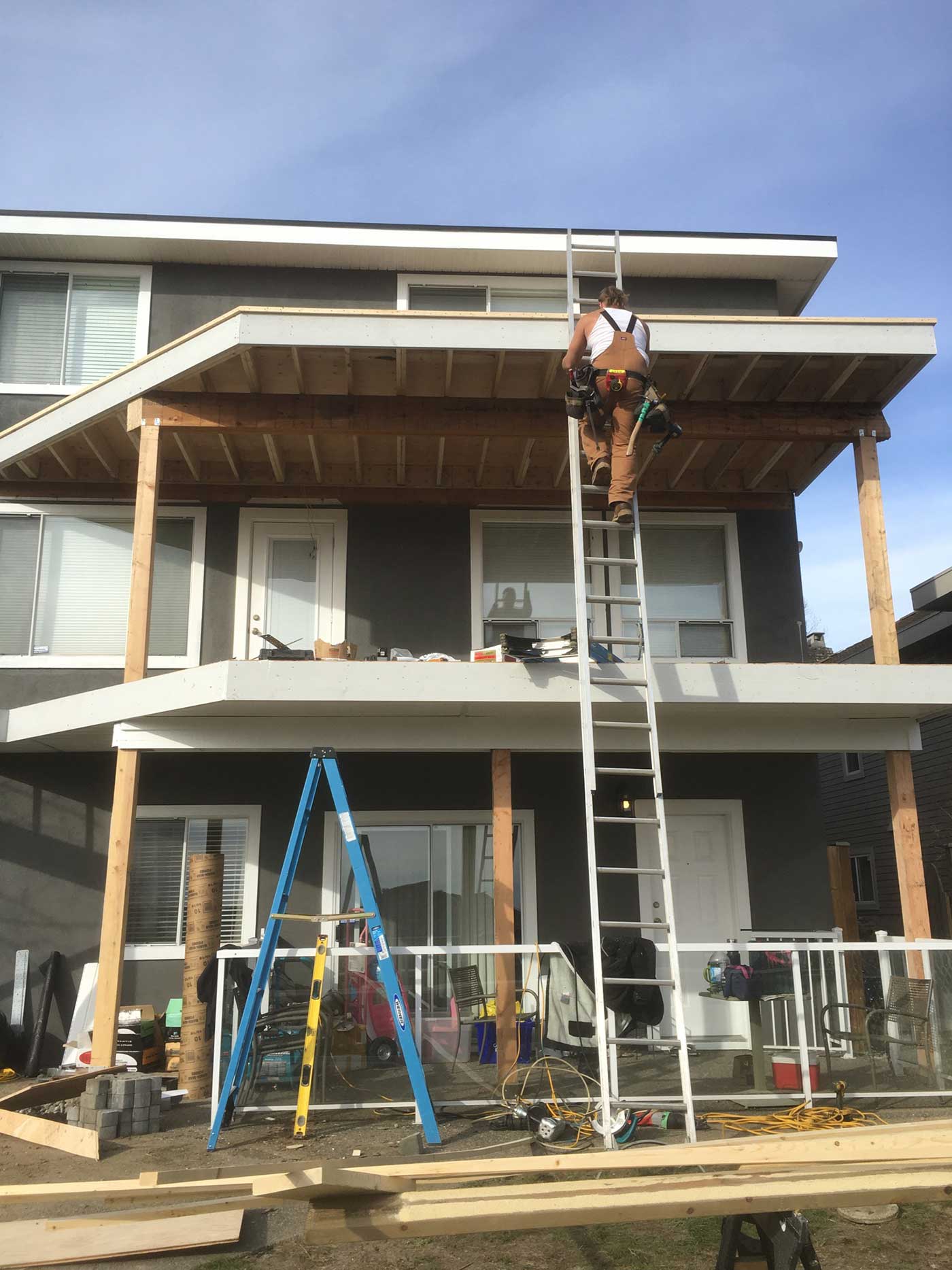
Railings, stairs, privacy walls, covers, and other outdoor features can all be considered as part of the overall project.
Andre stays involved throughout the process, from the quote and planning stage through construction and final inspection.
Vinyl vs. Composite Decking: What’s the Difference?
The biggest difference is waterproofing.
Composite decking uses individual deck boards. Vinyl decking creates a continuous waterproof surface.
Vinyl may suit you better if keeping the area underneath dry is one of your main priorities.
Composite may suit you better if you want the look of individual deck boards and don’t require the decking surface itself to create a waterproof area below.
| Consideration | Vinyl Decking | Composite Decking |
| Waterproof surface | Yes, when properly installed | No |
| Dry space below | Strong option | Requires another waterproofing solution |
| Regular staining | Not required | Not required |
| Appearance | Continuous finished surface | Individual deck boards |
| Maintenance | Relatively low | Relatively low |
| Best fit | Waterproofing priorities | Board-style deck appearance |
There’s no reason to choose between them based on popularity. We’ll help you choose based on what the deck actually needs to do.
Frequently Asked Questions About Vinyl Decking
Is vinyl decking good for BC weather?
Is vinyl decking waterproof?
Can vinyl decking keep the space under my deck dry?
Yes. Vinyl is particularly useful for elevated decks where you want to create dry storage, protect an entrance, or keep another usable area underneath dry.
Does vinyl decking need much maintenance?
Vinyl decking is relatively low maintenance, but it still needs routine cleaning. Dirt, leaves, and other debris should be removed as needed.
Do I need to stain a vinyl deck?
No. Vinyl decking doesn’t require the regular staining associated with natural wood decking.
Is vinyl better than composite decking?
Neither material is automatically better. Vinyl is a strong option when waterproofing is the priority. Composite may make more sense when you want the appearance of individual deck boards and don’t require the surface to keep the area underneath dry.
Is vinyl better than cedar?
That depends on your priorities. Vinyl provides waterproofing with lower maintenance, while cedar gives you the natural appearance of real wood with more ongoing care.
What colours does vinyl decking come in?
Vinyl decking is available in a range of colours and finishes. We can help you compare options that work with your home and the rest of your deck design.
Can you replace an existing deck surface with vinyl?
That depends on the condition and construction of the existing deck. We’ll need to assess the structure and surface before recommending the right approach.
Do you install vinyl decking throughout the Lower Mainland?
Yes. We build and improve decks for homeowners throughout the Lower Mainland, including Langley, Surrey, Coquitlam, Port Coquitlam, Port Moody, Maple Ridge, Delta, White Rock, Vancouver, and surrounding communities.


Planning a Composite Deck in the Lower Mainland?
If you’re considering vinyl decking, start by thinking about what you need the deck to do.
Do you need dry storage underneath? Is there an entrance or patio below? Are you trying to reduce maintenance? Do you prefer a waterproof surface over individual deck boards?
Request a free quote and we’ll help you plan a deck that works for your home, your budget, and the Lower Mainland climate.