

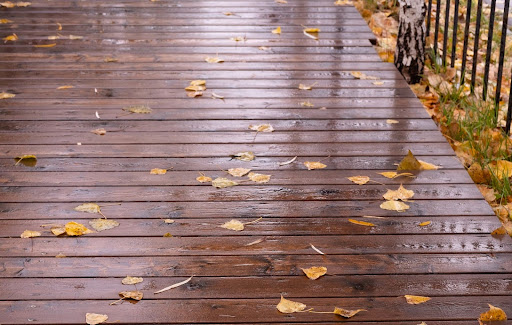
When fall rain and winter moisture settle into the Lower Mainland, even a well-built deck can become slick. With so much rainfall and cold temperatures in cities like Coquitlam, Langley, Port Moody, and Surrey, keeping your outdoor space safe takes a bit of planning and the right maintenance habits.
At All Hands On Deck, we work with a variety of materials like cedar, composite, vinyl, fibreglass, pressure-treated lumber, concrete, and Flexstone. We see firsthand how moisture affects each material. The good news is that a few practical steps can make your deck safer and easier to walk on all season long.
Why Decks Become Slippery in BC’s Climate
The Lower Mainland’s cool, damp weather creates perfect conditions for:
- Algae and mildew buildup
- Moisture sitting on flat surfaces
- Frozen patches during overnight drops in temperature
- Debris that holds water and creates slippery spots
Every deck material behaves differently. For example:
- Cedar gains traction when clean but becomes slick once algae forms.
- Composite resists rot but can grow algae in shaded areas.
- Vinyl decking offers strong waterproofing but needs seasonal cleaning to maintain grip.
- Concrete can develop surface film and moss without routine care.
Practical Ways to Prevent a Slippery Deck
1. Keep the Surface Clean and Free of Debris
Keeping your deck clean is one of the simplest ways to reduce slipperiness, especially in the Lower Mainland where moisture sits on surfaces for long periods. The right cleaning method depends on your deck material, so here are a few approaches that work well for most homes.
Start with a soft-bristle brush and a mild cleaner. This helps loosen algae, dirt, and early moss growth without damaging the surface. For cedar or pressure-treated wood, use a wood-safe cleaner and avoid anything too harsh, since aggressive chemicals can strip natural oils and lead to premature wear.
When rinsing, use a regular garden hose rather than a pressure washer unless your material specifically allows it. High pressure can damage wood fibres, lift vinyl seams, or abrade composite boards if you hold the wand too close. If you do choose to use a pressure washer, keep it on a low setting and maintain plenty of distance from the surface.
For vinyl decking and composite boards, warm water and gentle soap work very well. These materials do not absorb water the way wood does, so a simple wash removes most buildup. Avoid bleach-based cleaners on composite, since they may cause discoloration. Vinyl cleaners should also be non-abrasive to protect the membrane’s waterproofing layer.
If you have a fibreglass deck, a mild household cleaner and a soft brush are usually enough to restore traction. Fibreglass has a gelcoat surface that can be scratched by stiff brushes, so gentle cleaning is best.
For concrete decks, a stiff outdoor broom and diluted detergent do a good job of removing slippery film. Concrete can handle slightly stronger scrubbing, but avoid overly acidic cleaners since they may degrade the surface over time.
Regular cleaning in the wet season keeps algae from taking hold and makes every material type safer to walk on.
If your deck is older and showing signs of surface wear, there are many ways to extend your deck’s life with proper maintenance and care.
2. Improve Drainage Around and Under the Deck
Standing water is one of the biggest causes of slick surfaces in the Lower Mainland.
Good drainage comes from:
- Proper board spacing
- Slope that directs water away
- Enough airflow beneath the structure
If your deck lacks adequate slope or ventilation, you may be interested in our guide to building new decks designed for BC weather.
3. Apply a Non-Slip Coating or Traction Material
Some materials benefit from grit-added sealants or traction strips. These can reduce slipperiness on:
- Wood decks
- Older vinyl membranes
- Concrete decks
If your deck is concrete, you may also want to learn more about our concrete deck solutions.
4. Trim Back Shaded or Overgrown Areas
Decks that receive little sunlight stay damp longer. Trimming branches or hedges to allow more airflow helps reduce algae growth and shortens drying time.
For homeowners who want both shade and airflow, a pergola can be a smart upgrade because it provides filtered light rather than full coverage.
5. Install Proper Outdoor Lighting
Slippery spots are even riskier when you cannot see them clearly. Adding lighting along railings or stairs increases safety during darker fall and winter evenings.
If you are considering a railing upgrade, explore:
Lighting pairs particularly well with modern railing systems, especially aluminum and glass.
6. Keep Stairs in Good Condition
Deck stairs are one of the first areas to become slippery. Anti-slip treads or textured materials help maintain safety when temperatures fluctuate.
If your stairs need replacement or reinforcement, you can view our stairs page or the additional features stairs section.
7. Consider a Waterproof Roof or Awning
Keeping parts of your deck dry is one of the most effective ways to prevent slippery surfaces during fall and winter. When rain and moisture are kept off the walking area, algae has fewer places to grow, surfaces dry faster, and the overall deck structure lasts longer. A properly designed cover also helps protect railings, stairs, and furniture, which means less maintenance for you and a more comfortable space you can use year-round. Many homeowners choose to add a permanent roof or awning when they want dependable shelter without changing the look of their outdoor space.
If you are exploring ways to keep your deck dry, you can take a look at several options we install across the Lower Mainland. Aluminum awnings offer strong durability and excellent corrosion resistance in our coastal climate. Glass awnings are ideal for homeowners who want protection while still letting natural light through. For a more traditional, handcrafted look, timber frame roofs add warmth and long-term strength. You can browse all available styles on our awnings and roofs page to see which option suits your deck and home best.
When to Consider a Deck Assessment
If your deck remains slippery even after cleaning and maintenance, the issue may be structural. Common reasons include:
- Boards spaced too tightly
- Insufficient airflow
- A worn-down surface coating
- Long-term algae or moisture damage
- Poor drainage around the property
We regularly inspect decks across Coquitlam, Langley, Surrey, Maple Ridge, and other Lower Mainland communities. We will walk you through what is causing the problem and offer practical, honest solutions.
Final Thoughts
Slippery deck surfaces are common in BC’s wet seasons, but they do not have to be a safety concern. With simple maintenance, good drainage, and the right material choices, your deck can stay secure and comfortable year-round.Reach out today if you want advice specific to your deck’s material, age, or condition, we are always happy to help.
Recent Comments