

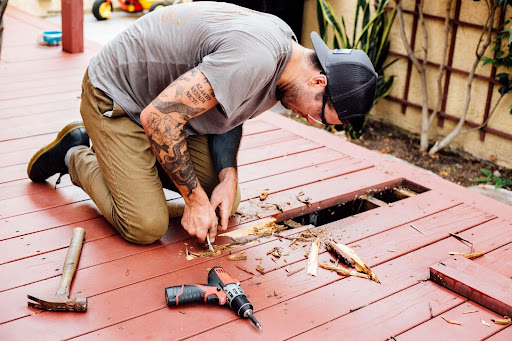
If you have an aging deck, you are not alone. In the Lower Mainland, our long wet seasons take a toll on outdoor wood, vinyl membranes, composite boards, fasteners, and even structural framing. Many homeowners ask the same question: should I refinish the deck I have, or is it time to rebuild it entirely?
With years of hands-on experience building cedar, composite, vinyl, pressure-treated, fibreglass, concrete, and Flexstone decks, we have seen every scenario. Sometimes a simple surface update is all you need. Other times, deeper issues make rebuilding the safer and more cost-effective choice.
This guide will help you understand what to look for and how to decide which route makes sense for your home.
When Refinishing Makes Sense
Refinishing is often the right approach when the deck’s structure is still strong and the surface shows normal signs of wear. Here are some indicators that refinishing may be enough.
1. The framing is solid and free of rot
If the joists and beams are still in good condition, surface-level improvements can go a long way. Solid framing means you can safely:
- Sand and stain cedar or other wood
- Replace worn boards
- Refresh a vinyl or fibreglass surface
- Upgrade railings
- Improve aesthetics without major construction
Curious about railing options during a refinish? You can explore: Aluminum railings, Glass railings, and Wood railings.
2. The surface looks tired but the deck still feels sturdy
Cedar decks often fade or show surface cracking after years of exposure. Composite boards may scratch, and vinyl membranes may look worn. These issues are cosmetic rather than structural.
3. You want a fresh look without the cost of full replacement
Refinishing works well for homeowners who want to modernize their deck without rebuilding it. Consider upgrading to a long-lasting surface material such as composite decking if your framing is still sound.
When Rebuilding Is the Better Choice
Rebuilding becomes necessary when safety or structural integrity is compromised. A worn surface can be refinished, but unsafe framing cannot be ignored.
1. Visible rot, softness, or sagging
If boards bounce when you walk on them, or you notice soft spots, rot may have spread into the framing. In the Lower Mainland’s damp climate, rot travels quickly once it starts.
2. Ledger issues or loose connections
The ledger board attaches the deck to the house. If it has pulled away or shows signs of deterioration, a rebuild is usually the safest option.
3. Outdated construction that cannot meet modern safety requirements
Older decks often fall short of today’s safety standards, especially in the Lower Mainland where moisture and age accelerate wear. Many older structures were built before updated building codes or relied on materials and techniques that no longer hold up to current expectations. Here are a few common issues we see during assessments.
Footings
A deck may have shallow footings that do not extend below the frost line, which leads to shifting or heaving during cold snaps. In some cases, footings were poured on disturbed soil or without proper sizing, causing beams to tilt or settle unevenly. When the support posts move, the entire deck can become unstable.
Beam sizing
Older decks were often built with beams that are too small for the span they are carrying. This can cause noticeable sagging, bouncing when walked on, or even cracking under load. With today’s preference for heavier items like hot tubs, outdoor kitchens, or privacy walls, undersized beams become a significant safety concern.
Railing height
Many older railings were built at heights that no longer meet current standards. A common example is a railing that sits around 32 inches tall, while today’s requirements call for approximately 42 inches in many scenarios. Shorter railings increase fall risk, especially on higher decks or around stairways. If your railings are aging, weak, or too low, modern replacements such as aluminum, glass, or wood railings offer safer and more durable options. You can review all updated railing choices on our railings overview page.
Waterproofing measures
Older waterproofing methods often relied on basic paint, thin membranes, or simple flashing that breaks down over time. Once moisture gets into the framing, rot begins to spread faster than most homeowners realize. Vinyl systems and modern coatings like Flexstone offer reliable protection today, but many older decks lack these features entirely, leaving the structure vulnerable to long-term damage.
These issues do not always mean your deck needs to be rebuilt, but they do require a careful inspection to determine whether refinishing is safe or if a full reconstruction is the better investment.
4. Persistent moisture problems that refinishing cannot solve
If water sits on the deck, algae returns quickly, or the surface repeatedly becomes slippery, structural drainage or slope issues may be the cause. In these cases, rebuilding the deck with correct spacing, slope, and airflow creates a long-term fix.
Material Considerations for Each Option
Different materials behave differently as they age. Here is a simple summary to help guide your thinking.
Cedar or Pressure-Treated Wood
- Often suitable for refinishing if rot is not present
- Sanding and re-staining can restore appearance
- Rebuild if structural members show decay
Composite Decking
- Refinishing is usually surface-level only
- Scratches or fading may not require replacement
- Rebuild if framing is the issue, as composite boards rely on strong support
Vinyl or Fibreglass Decks
- Can be resurfaced if membrane wear is the main problem
- Rebuild if the slope is incorrect or water collects under the surface
Concrete or Flexstone
- Concrete can be repaired or resurfaced if cracking is minimal
- Extensive cracking or settling often means rebuilding is more cost-effective
- Flexstone offers a durable resurfacing solution when the underlying structure is sound
Questions to Ask Before Deciding
To keep the decision simple, here are a few practical questions to ask yourself.
1. Does the deck feel stable when you walk on it?
Movement or bouncing suggests framing problems.
2. Does the deck show visible signs of rot?
Soft, dark spots or crumbling wood almost always require rebuilding.
3. Is moisture an ongoing issue?
If algae returns quickly, or the deck stays damp, refinishing may not solve the root cause.
4. Do you want the deck to look new or last longer?
A rebuild allows you to upgrade to longer-lasting materials such as composite, vinyl, or cedar treated for durability.
When to Bring in a Professional Assessment
A trained eye can spot problems beneath the surface. Andre personally handles every assessment, taking the time to explain what he sees and offer honest feedback. Sometimes a deck looks rough but only needs refinishing. Other times, hidden structural issues mean rebuilding is the safer path.If you want straightforward guidance, you can request a no-pressure quote from our team at All Hands on Deck.
Recent Comments